Certifications & Courses
01
Advanced Pharmacovigilance and Regulatory Affairs Training and Certification (APVASC)

Completed advanced training in global pharmacovigilance and regulatory affairs with a focus on drug safety surveillance, regulatory compliance, and post-market risk management. The program provided comprehensive instruction on international regulatory requirements, adverse event reporting, safety signal detection, and regulatory submission processes across the pharmaceutical product lifecycle.
Key competencies developed include:
-
Global pharmacovigilance principles and Good Pharmacovigilance Practices (GVP)
-
Individual Case Safety Report (ICSR) processing and adverse event reporting
-
MedDRA terminology and medical coding concepts
-
Signal detection, benefit-risk evaluation, and risk management planning
-
Aggregate safety reporting, including PSURs, DSURs, and post-marketing surveillance
-
Global regulatory frameworks and guidelines, including FDA, EMA, ICH, MHRA, PMDA, and CIOMS
-
Regulatory submission pathways, including INDs, NDAs, BLAs, eCTD submissions, and lifecycle management
-
Regulatory requirements for biologics, generic drugs, OTC products, combination products, and orphan drugs
-
Inspection readiness, pharmacovigilance audits, quality systems, CAPA, and compliance documentation
-
Cross-functional collaboration supporting drug safety, regulatory affairs, clinical development, and quality teams
This certification strengthened my understanding of global drug safety operations and regulatory strategy while expanding my ability to support pharmacovigilance activities, regulatory submissions, compliance initiatives, and product lifecycle management within pharmaceutical and biotechnology organizations.
02
Chemical Hygiene Officer Pathway Certification

Completed comprehensive training in chemical hygiene, laboratory safety, and occupational health with a focus on hazard identification, chemical risk management, regulatory compliance, and laboratory best practices. The program provided in-depth instruction on developing safe laboratory environments, implementing Chemical Hygiene Plans (CHPs), and ensuring compliance with OSHA Laboratory Standards and Hazard Communication requirements.
Key competencies developed include:
-
Chemical hazard identification and risk assessment
-
Chemical handling, storage, transportation, and waste management
-
Development and implementation of Chemical Hygiene Plans (CHPs)
-
OSHA Laboratory Standard and Hazard Communication compliance
-
GHS labeling, Safety Data Sheets (SDS), and chemical documentation
-
Laboratory inspections, safety audits, and corrective action practices
-
Chemical spill response, emergency preparedness, and incident prevention
-
Personal protective equipment (PPE) selection and laboratory safety controls
-
Laboratory ventilation, engineering controls, and safe facility design principles
-
Chemical inventory management and hazardous material accountability
-
Fire safety, eyewash stations, emergency showers, and laboratory emergency response
-
Science safety risk management and fostering a culture of laboratory safety
This certification strengthened my understanding of laboratory safety systems, chemical hygiene, and regulatory compliance while enhancing my ability to support safe laboratory operations, quality systems, chemical risk management, and environmental health and safety initiatives across research, pharmaceutical, and manufacturing environments. The program also prepares participants for the National Registry of Certified Chemists (NRCC) Chemical Hygiene Officer (CHO) certification examination.
03
Quality Control and Regulatory in Cosmetic Science
Credential ID 3M4A92PPXKRQ
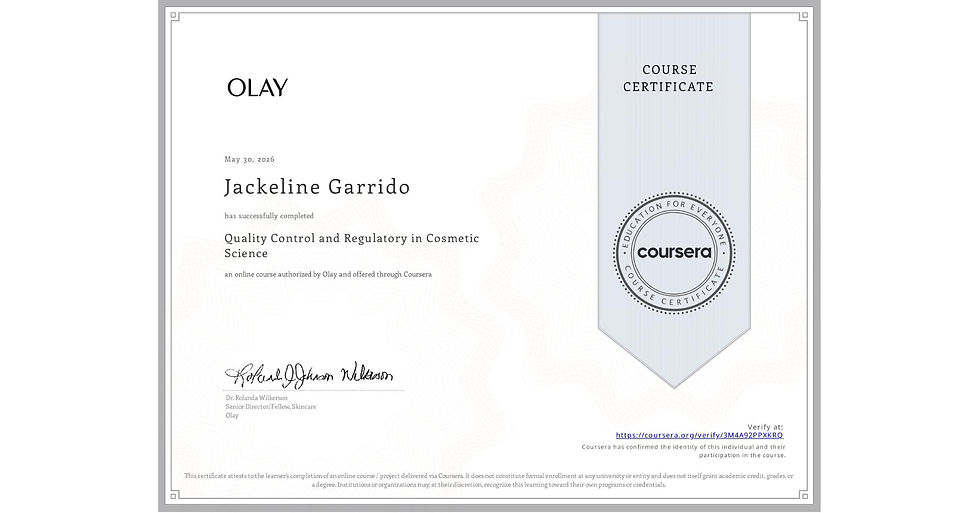
Completed advanced training in cosmetic quality systems, product safety, and global regulatory compliance with a focus on quality assurance, manufacturing controls, and cosmetic regulations. The program provided comprehensive instruction on cosmetic safety assessments, international regulatory frameworks, quality management systems, and analytical quality control practices used throughout the cosmetic product lifecycle.
Key competencies developed include:
-
Global cosmetic regulatory frameworks and regulatory agency requirements
-
FDA cosmetic regulations and international compliance considerations
-
Cosmetic product safety assessments and toxicological evaluation
-
Ingredient safety, finished product safety, and risk assessment methodologies
-
Cosmetic labeling requirements, color additive regulations, and preservative compliance
-
Quality Management Systems (QMS), Quality Assurance (QA), and Quality Control (QC) principles
-
Good Manufacturing Practices (GMP) and quality system implementation
-
Raw material qualification, specifications, and Certificate of Analysis (CoA) review
-
Finished product quality control, batch release concepts, and manufacturing quality oversight
-
Analytical testing, statistical process control, and data interpretation
-
Audit readiness, compliance monitoring, documentation, and recordkeeping
-
Cross-border regulatory compliance and global product launch considerations
This certification strengthened my understanding of cosmetic quality systems, regulatory strategy, and product safety while enhancing my ability to support cosmetic regulatory compliance, quality assurance, manufacturing quality control, ingredient evaluation, and global product commercialization throughout the product lifecycle.
04
GHS and OSHA Hazardous Communication

Completed training in OSHA Hazard Communication (HazCom) standards with a focus on chemical hazard identification, workplace safety, and regulatory compliance. The program provided comprehensive instruction on the Globally Harmonized System (GHS), Safety Data Sheets (SDS), chemical labeling requirements, and the development of effective workplace hazard communication programs to promote the safe handling and use of hazardous chemicals.
Key competencies developed include:
-
OSHA Hazard Communication Standard (HazCom) requirements
-
Globally Harmonized System (GHS) for chemical classification and labeling
-
Interpretation and application of the 16-section Safety Data Sheet (SDS) format
-
Supplier and workplace chemical labeling requirements
-
Chemical hazard identification and risk communication
-
Development and implementation of written Hazard Communication Programs
-
Safe handling, storage, and use of hazardous chemicals
-
Personal Protective Equipment (PPE) selection and workplace safety practices
-
Hazard recognition, exposure prevention, and risk mitigation strategies
-
Chemical safety documentation and regulatory compliance
-
Workplace safety procedures and emergency preparedness
-
Case study analysis to strengthen hazard assessment and safety decision-making
This certification strengthened my understanding of OSHA Hazard Communication requirements, chemical safety, and regulatory compliance while enhancing my ability to interpret Safety Data Sheets, communicate chemical hazards effectively, support laboratory and manufacturing safety programs, and contribute to safe workplace practices across research, quality, regulatory, and industrial environments.
05
Foundations of Project Management

Completed foundational training in project management principles, methodologies, and leadership with a focus on planning, execution, stakeholder communication, and organizational effectiveness. The program provided comprehensive instruction on the project management lifecycle, project coordination, change management, and the essential skills required to successfully manage projects across diverse industries.
Key competencies developed include:
-
Project management fundamentals and project lifecycle phases
-
Project planning, coordination, and execution strategies
-
Project manager roles, responsibilities, and leadership principles
-
Stakeholder identification, communication, and engagement
-
Organizational structures, culture, and their impact on project success
-
Predictive, Agile, and hybrid project management methodologies
-
Change management principles and organizational change initiatives
-
Project scope definition and project objective development
-
Risk identification, problem-solving, and strategic decision-making
-
Cross-functional collaboration and team coordination
-
Project documentation, planning tools, and workflow organization
-
Professional communication, time management, and prioritization skills
This certification strengthened my understanding of project management frameworks and organizational leadership while enhancing my ability to coordinate cross-functional initiatives, manage competing priorities, communicate effectively with stakeholders, and support projects from initiation through completion. These skills are directly applicable to regulatory affairs, product development, quality, and commercialization projects within the pharmaceutical, cosmetics, fragrance, and consumer products industries.
06
Good Clinical Practice Certification

Completed comprehensive training in Good Clinical Practice (GCP) principles with a focus on the ethical, scientific, and regulatory standards governing clinical research involving human participants. The program provided in-depth instruction on clinical trial conduct, participant safety, regulatory compliance, quality assurance, and documentation practices in accordance with internationally recognized GCP guidelines and NIH requirements.
Key competencies developed include:
-
International Council for Harmonisation (ICH) Good Clinical Practice (GCP) principles
-
Ethical conduct of clinical research and protection of human subjects
-
Institutional Review Boards (IRBs) and ethical review processes
-
Informed consent requirements and participant rights
-
Participant safety, adverse event reporting, and safety monitoring
-
Clinical trial quality assurance and quality management principles
-
Clinical protocol development, implementation, and protocol compliance
-
Clinical trial documentation, source documentation, and record-keeping practices
-
Confidentiality, privacy, and regulatory data protection requirements
-
Investigator responsibilities, sponsor oversight, and research team roles
-
Recruitment and retention strategies for clinical trial participants
-
Investigational New Drug (IND) regulations and regulatory compliance
-
Research integrity, prevention of research misconduct, and inspection readiness
This certification strengthened my understanding of clinical research regulations, ethical standards, and quality systems while enhancing my ability to support clinical trial operations, regulatory compliance, protocol adherence, safety reporting, and documentation throughout the clinical development lifecycle. The training aligns with internationally recognized Good Clinical Practice (GCP) principles used to ensure the rights, safety, and well-being of research participants while maintaining the integrity and reliability of clinical trial data.
07
Novartis GCP, Prep and Personnel and Recruitment Trial Certification

Completed a three-course Good Clinical Practice training series developed by Novartis Learning, covering the ethical, regulatory, and operational requirements for preparing, initiating, conducting, monitoring, and closing clinical trials. The program examined the responsibilities of investigators and site personnel, participant recruitment and informed consent, essential clinical documentation, data integrity, protocol compliance, safety reporting, and regulatory oversight throughout the clinical trial lifecycle.
Courses completed:
-
Introduction to Good Clinical Practice
-
Fundamentals of Good Clinical Practice: Prep and Personnel
-
Fundamentals of Good Clinical Practice: Recruitment and Trial
Key competencies developed include:
-
Good Clinical Practice principles and clinical research ethics
-
Clinical trial preparation, site qualification, and site selection activities
-
Investigator and clinical research site personnel responsibilities
-
Institutional Review Board and Independent Ethics Committee processes
-
Essential documents, source documentation, and Case Report Forms
-
ALCOA+ data-integrity and clinical record-keeping principles
-
Participant recruitment, enrollment, and retention planning
-
Informed consent, electronic consent, and protection of vulnerable populations
-
Clinical protocol implementation, amendments, and compliance
-
Adverse-event documentation, causality assessment, and safety reporting
-
Clinical trial monitoring, audit trails, audits, and regulatory inspections
-
Trial closeout, document archiving, and inspection readiness
This training series strengthened my understanding of how clinical trials are planned and managed in accordance with GCP requirements. It enhanced my ability to support ethical participant protection, accurate clinical documentation, regulatory compliance, cross-functional study coordination, and the generation of reliable clinical trial data throughout the research process.